
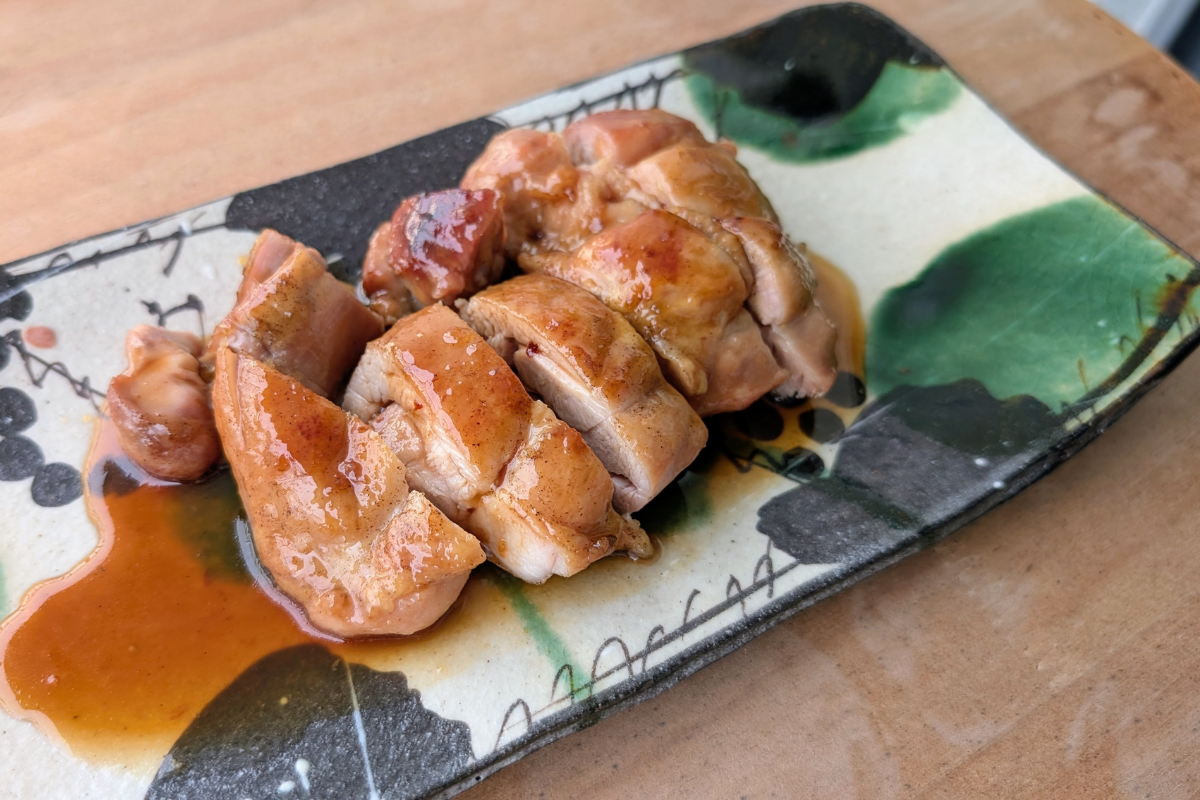
If you’ve been searching for a halal chicken teriyaki recipe that actually works without mirin or sake — you’ve found it. The secret to this recipe isn’t just the sauce. It’s the technique: a light dusting of potato starch (katakuriko) on the chicken before cooking. This creates a perfectly crispy crust, locks in the juices, and — here’s the best part — naturally thickens the teriyaki sauce as it cooks down, giving you that beautiful, glossy glaze you see at Japanese restaurants. No mirin. No sake. No alcohol. 100% halal.
Why This Halal Chicken Teriyaki Actually Tastes Authentic
Most halal teriyaki recipes simply skip mirin and hope for the best. The result? A flat, watery sauce with none of the depth you’d expect from Japanese cooking. This recipe solves that with two key moves: First, we replace mirin with rice vinegar + honey. This combination gives you the same sweet-savory balance and mild acidity that mirin provides — without a single drop of alcohol. Second, we coat the chicken in potato starch before pan-frying. The starch crisps up the surface and dissolves slightly into the sauce, thickening it naturally into a rich, sticky glaze. The result is 100% halal, deeply flavorful, and seriously impressive.
Ingredients
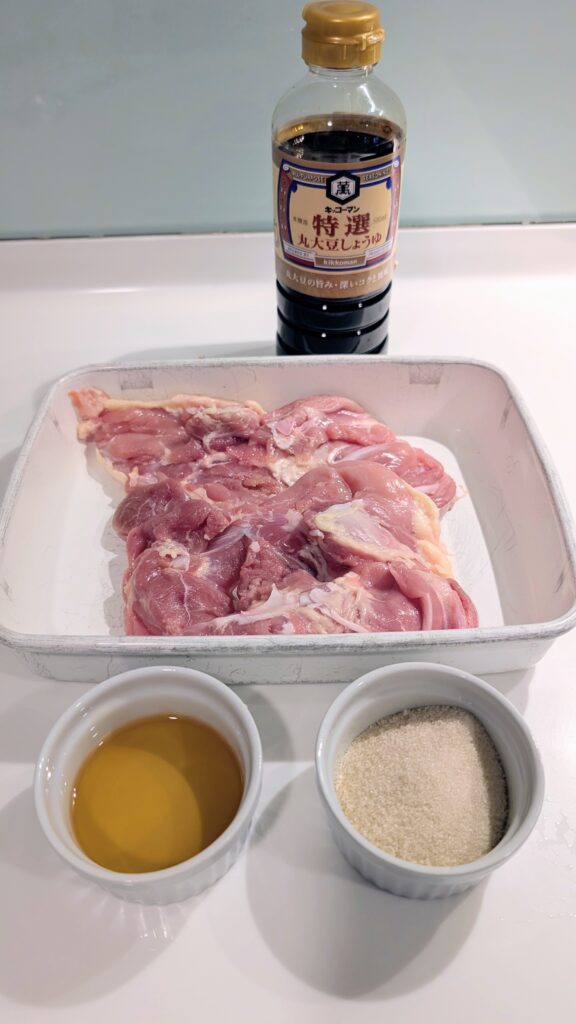
For the Chicken:
- 500g chicken thighs, boneless and skinless (halal-certified)
- Salt and black pepper, to taste
- 2 tablespoons potato starch (katakuriko / 片栗粉)
- 1 tablespoon vegetable oil
For the Halal Teriyaki Sauce (Mirin-Free):
- 3 tablespoons halal-certified soy sauce
- 1 tablespoon rice vinegar (replaces mirin)
- 1 tablespoon honey (replaces mirin’s sweetness)
- 2–3 tablespoons water
💡 The Mirin Substitute Explained: Mirin is a sweet Japanese rice wine — and the main ingredient that makes teriyaki “teriyaki.” Since it contains alcohol, it’s off the table for halal cooking. Our substitute: rice vinegar + honey. → Rice vinegar adds the subtle tang and depth of fermented flavor. → Honey adds natural sweetness and helps the sauce caramelize and glaze. The result is nearly identical to the real thing.
How to Make Halal Chicken Teriyaki – Step by Step
Pat the chicken thighs completely dry using paper towels. Removing moisture is the most important step — it’s what allows the chicken to brown properly instead of steaming in the pan.
Season both sides generously with salt and black pepper.
Dust both sides of the chicken evenly with potato starch. Use your hands to pat it in lightly — you want a thin, even coating, not a thick breading.
This step is the secret to this recipe. The starch creates a lightly crispy crust when pan-fried, and later dissolves into the sauce to create a natural, glossy thickener. No cornstarch slurry needed.
Heat vegetable oil in a frying pan over medium-high heat. When the oil is hot (a drop of water should sizzle immediately), place the chicken smooth-side down.
Cook without moving for 4–5 minutes until the bottom is deeply golden brown. Flip and cook the other side for another 3–4 minutes.
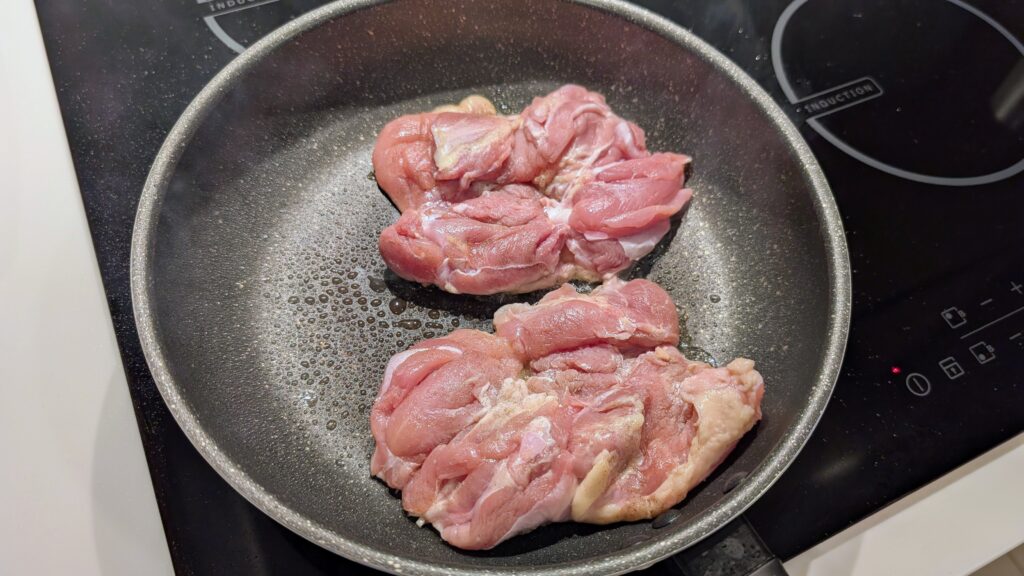
Once both sides are well browned, reduce the heat to low and cover the pan with a lid. Let the chicken steam for 3–4 minutes until fully cooked through.
To check: the juices should run clear when you pierce the thickest part with a skewer, or the internal temperature should reach 75°C (165°F).
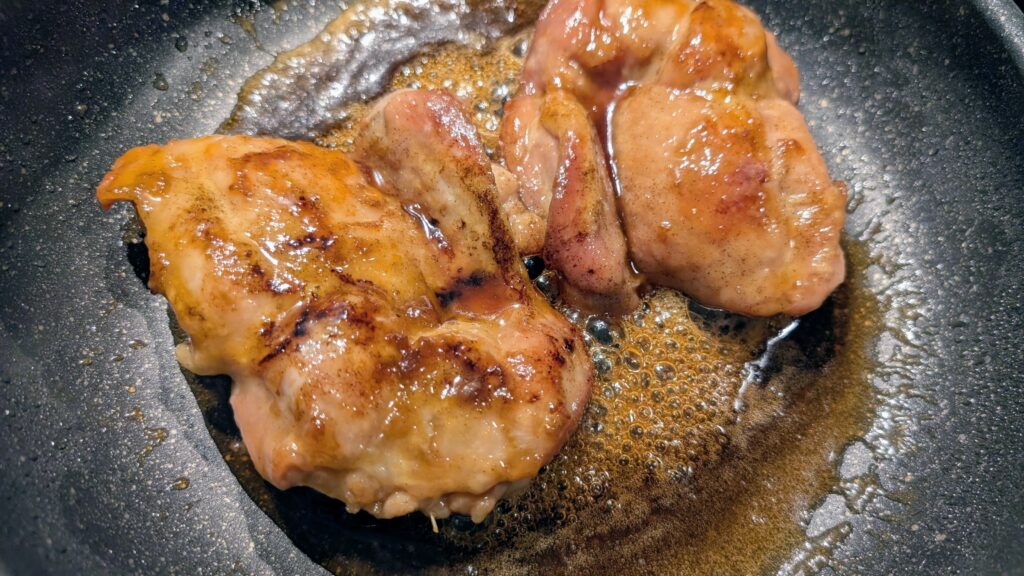
Remove the lid and increase the heat to medium. Pour the teriyaki sauce (soy sauce, rice vinegar, honey, and water) directly into the pan.
The sauce will begin to bubble. This is exactly what you want. As it bubbles, the potato starch that has dissolved from the chicken will thicken the sauce naturally.
Using a spoon or the pan itself, baste the chicken by spooning the sauce over the top repeatedly. This is what creates the beautiful lacquered, glossy finish — a technique called “tare-gake” (タレかけ) in Japanese cooking.
Continue basting and reducing for 2–3 minutes until the sauce coats the chicken thickly and has a deep, shiny glaze. Turn off the heat.
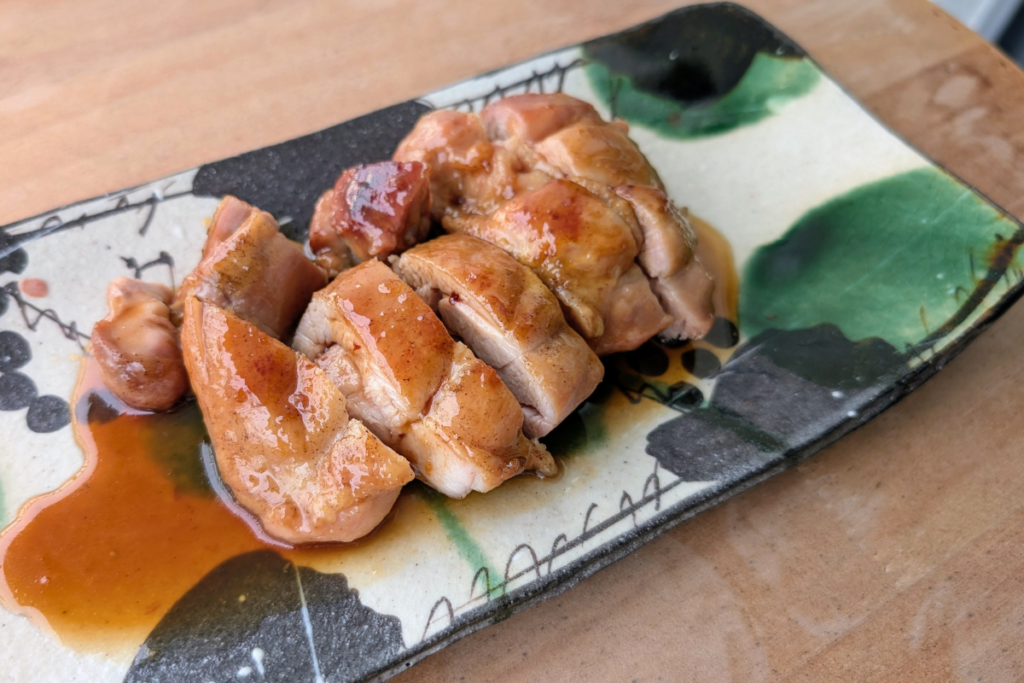
Let the chicken rest for 2 minutes before cutting. This allows the juices to redistribute, keeping every slice moist and tender.
Slice into pieces and arrange on a plate. Drizzle any remaining sauce from the pan over the top.
Serve immediately with:
→ Steamed Japanese short-grain rice
→ Miso soup
→ Steamed broccoli or edamame
→ Sliced cucumber on the side
Pro Tips for Perfect Halal Chicken Teriyaki Every Time
- Always dry the chicken thoroughly. Moisture is the enemy of browning. Skipping this step is the #1 reason teriyaki turns out pale and soggy.
- Don’t skip the potato starch. It’s the difference between a watery sauce and a proper glaze. No other thickener works quite the same way.
- Use rice vinegar, not white vinegar. Rice vinegar is milder and closer to the flavor profile of mirin. White vinegar is too sharp.
- Baste, don’t just pour. Spooning the sauce over the chicken while it reduces is what gives you that restaurant-quality glossy coating.
- Rest before slicing. Two minutes of resting makes a noticeable difference in juiciness.
- Check your soy sauce label. Look for a halal certification mark on the bottle. Kikkoman Marudaizu soy sauce is a reliable halal-certified option available in Malaysia.
Where to Buy the Ingredients
All of the ingredients in this recipe are easy to find. Here’s where I get them:
| Ingredient | Where to Buy |
|---|---|
| Halal-Certified Soy Sauce | |
| Potato Starch (Katakuriko) | |
| Raw Honey | |
| Rice Vinegar | |
| Non-stick Frying Pan |
📢 Affiliate Disclosure: Some of the links above are affiliate links.
If you make a purchase through these links, I earn a small commission at no extra cost to you.
This helps support Halal Japan and allows me to keep creating free recipes. Thank you!
Frequently Asked Questions
- What is the best halal substitute for mirin in teriyaki sauce?
-
The best halal substitute for mirin is a combination of rice vinegar and honey. Rice vinegar provides the mild tanginess and depth that mirin adds, while honey replaces the natural sweetness. Use a 1:1 ratio — 1 tablespoon of rice vinegar plus 1 tablespoon of honey works perfectly in most teriyaki recipes.
- Why do you coat the chicken in potato starch before cooking?
-
Coating the chicken with potato starch helps create a crispy surface and naturally thickens the teriyaki sauce as it cooks.
- Is this chicken teriyaki recipe completely alcohol-free?
-
Yes, 100%. This recipe contains no mirin, no sake, no cooking wine, and no other alcohol. The mirin substitute (rice vinegar and honey) is fully halal.
- Can I use cornstarch instead of potato starch?
-
Yes, cornstarch works as a substitute. However, potato starch (katakuriko) gives a slightly lighter, crispier texture and a cleaner flavor, which is why it’s traditionally used in Japanese cooking. If you use cornstarch, the result will still be delicious.
- How do I store leftover chicken teriyaki?
-
Store leftovers in an airtight container in the refrigerator for up to 3 days. To reheat, warm gently in a pan over low heat with a splash of water to loosen the sauce. Microwave reheating works too, but the pan method keeps the texture better.
Comments
List of comments (1)
こんにちは、これはコメントです。
コメントの承認、編集、削除を始めるにはダッシュボードの「コメント」画面にアクセスしてください。
コメントのアバターは「Gravatar」から取得されます。